Monday, April 20, 2015

Lack of Comprehension: death metal and the x chromosome

I frequently sift through the history of metal, looking for the inauspicious beginnings of today’s big fucking deal. This is often exciting, but sometimes it means accepting things I do not like. I will speak plainly and candidly in saying that I am both a feminist and a metal fan, and sometimes these roles come into conflict. Ground zero for that internal struggle is death metal; a genre that exists to make us uncomfortable.

I could make a solid argument that misogyny is endemic to metal, though it’s often a casual misogyny. Bands such as Black Sabbath and Crimson Glory portray women as either victims to be pitied or villains to be thwarted. That’s when they even bother to acknowledge women. The arrival of death metal heralded a more unsettling theme: portrayals of violence against women, often with sexual overtones.

None of which makes these narratives inherently degrading. We look upon films such as “Psycho” and “Silence of the Lambs” as brilliant works of cinema, giving us morally challenging portraits of complex characters. To steal a quip from Daren “Rap Critic” Jackson I’m convinced you can write about anything, it’s all in how you do it. Macabre may be trolls, but they also challenge us while releasing album after album about deplorable murders and sex crimes. At its best, their music verges on a satire of the American obsession with violence, and with serial killers in particular. You can already hear this on their 1987 debut EP, as they scream about Ed Gein:

“I'm a fiend, I'm so morbid
That I sleep with your organs at night
And have sex with decaying bodies
To me it's such a delight”

A short two years later we plumb to murkier depths with Autopsy. I must confess that Autopsy is one of my favorite old school death metal bands. I’ve seen them live, I own a couple of their albums, and I’ve listened to them ad nauseum. I absolutely love the way that they write riffs and compositions, and I also avoided reading their lyrics for several years. I did that in part because of songs like Dirty Gore Whore and Disembowel:

“I just couldn't take anymore shit
So with a swing of my knife her stomach was split
Putrid bile and guts all over the floor
Couldn't help but laugh at this vision of gore”

The narration shifts our empathy from the victim to the perpetrator, but this decision does not constitute an endorsement. You can put the listener in the shoes of a psychopath without portraying them as a sympathetic character. Instead, Autopsy give us a narrator devoid of subtlety, decency, compassion, nuance, or charisma. The song is not so much commentary as it is tautology, representing the tired view that monogamy and domesticity are inherently feminine and thus the nullification of masculinity. She has taken away his manhood, and the punishment must be death.

But in killing a woman he is also committing an amoral act. This positions our narrator as an outgrowth of counter-culture’s oldest and most treasured pastime: offending the squares. He represents the basis of transgressive art, and the building blocks of inverted populism.

Subverting social mores does not equate to liberation. Like a multi-billion dollar corporation selling images of rebellion, anti-establishment narratives are beloved by reactionaries. It’s not hard to find white supremacists, misogynists, or social Darwinists who believe themselves to be plucky outsiders. Their punitive and authoritarian worldview is cast as a heroic struggle against the tyranny of the inferior masses, even when it promises to free them. Art that seeks to shock and disgust has a valid role, but the legitimacy of its critique depends upon the targets that it picks and the ways in which it unsettles our pieties.

Cannibal Corpse exist exclusively to offend, and apparently even they found Ciris Barnes’ relentless hatred of women to be repellant beyond the pale. It’s one thing if you want someone to drop dead because they’ve legitimately wronged you, but to despise an entire gender because they don’t want to fuck you? Actually being a man means maturity, including the understanding that no amount of sexual congress can assuage your masculine insecurity.

Ms. Anthropia spelled out the effects of this in agonizing detail at Feminist Headbanger, pouring over the Grave song Sexual Mutilation. Already in 1989 we had death metal regurgitating the idiotic blathering that women need to be punished for agency and sexuality. A woman who either enjoys sex, controls her body and destiny, or uses sex for money must be dealt with in the harshest possible manner. For a genre so contemptuous of religion, this view bears a striking resemblance to the most ignorant and base of tribal superstitions. Once again, Grave is telling us nothing new.

Or at least not so far as I can tell. They’ve never released the lyrics for this song, and their 2010 re-recording is listed on Metal Archives as an “instrumental.” It’s a designation that should fool no one over the age of five.

I am often split between admiration and revulsion for extreme metal. I love the wholehearted dedication riffs and composition and arrangement, but I cannot financially support people who are stumping for genocide. I don’t like being affiliated with folks who see me as a race traitor, or my friends and family as subhuman parasites in need of extermination. These people seek the destruction of all that I hold dear.

Upon reflection, I owe misogynists the same contempt. Artists or not, they see women as less than human and unworthy to make decisions about their own lives and bodies. Similarly, they damn me with emasculation when I point this out. If whiteness can be revoked for acts of betrayal, so can masculinity. The cult of the backlash must remain pure, even as it speaks the language of persecution.

Saturday, December 13, 2014

Evoken/Beneath the Frozen Soil reviewed

This review was written a couple of years ago, but never published. I've done some re-working and revision, and it's now a fun little chunk of my spleen, vented into hypertext. Enjoy at your peril.
-----------------


Funeral doom is, for those confused by the nomenclature, a metal sub-genre of painfully slow and ominous music. Bands lease their growls from doom death, but the music is slowed to even greater morbidity. The template is insular, dense, and minimalist. A funeral doom band plays with a bitter lethargy that could make your grandmother impatient while waiting in line at the bank.
With a market as small and cultish such as seen in doom metal, funeral doom bands occupy a territory Spinal Tap’s Ron Smallwood might refer to as “more select.” If such remote corners of music evidence a hierarchy, Evoken is near the top of the heap. Since their founding in 1994, the band has grown a tiny cult of devotees, willing to follow their tortured minor chords all the way into the abyss.
Today’s offering is a split EP, divided between Evoken and Beneath the Frozen Soil (a relatively new band with only one EP to their credit). The Evoken half contains extra tracks from their A Caress of the Void sessions. The songs are nothing spectacularly original, but not a regurgitation of their past glories either. Perhaps these are deviations that didn’t entirely belong on Caress, but they are by no means weak. There is a feeling of natural progression and build, where riffs collapse in slow motion, crushing the synth strains and organ melodies. This is music for drinking alone, brooding about the futility of life, and cheering on the collapse of civilization.
Beneath the Frozen Soil are both less despondent and lesser in stature. Their black metal vocals promise an amusing addition to conventional doom-death formulas, but the actual riffs, compositions, and guitar tone are poorly chosen. The two part suite “Monotone Black” wastes over 12 minutes on aimless repetition, being neither infectious, nor thought-provoking, nor adventurous. The elements stolen from bands like Swallow the Sun and Katatonia are uncomfortably respectful reproductions, showing no understanding of why those bands tick or how to reshape an influence into an original identity or theme. These chaps possess prowess, but lack a certain je ne sais quoi that hardens dedication into a diamond. Evoken has gathered enough diamonds for a necklace, Beneath the Frozen Soil offer a cubic zirconia earring.

Saturday, October 11, 2014

Pipe Dreams from Five Fiends


Bonded by Blood is a masterpiece. Damned near every metal fan accepts this. What's less commonly known is that these three songs represent what should have been its rightful successor.

Exodus should have been metal legends, not also-rans. They were cut from the same cloth as thrash's "big four," with talent and inspiration to spare. This potential w
as squandered in legal squabbles with Torrid Records, a general inconsistency of songwriting quality, severe substance abuse problems, and the eventual replacement of thrash maniac Paul Baloff with a pedestrian Bon Scott imitator.

But whenever these problems came to fell Exodus, they were not present on Bonded, and they did not show up on the Pleasures of the Flesh demo. Granted, this tape only contains three songs, but they show the band maturing as musicians, composers, and lyricists. No one will mistake Baloff for Bruce Dickinson, but one perceives a concerted effort to move beyond the basic "poseurs must die" prattle.

The darkness lives forever
within your mind
No dreams, no thoughts
it's only endless time


The artistic ambitions of meth heads tax the imagination of even a warped mind such as your arrogant narrator. It's questionable how far Exodus might have carried these themes before killing themselves or each other, but that's a moot point now. Pleasures of the Flesh was denatured from this boiling vat of caustic solution to a neutral and tepid puddle of used window cleaner. Exodus never returned from the nether regions of mediocrity, and became another case study in self-destructive greatness.

originally written for:
 http://www.metal-archives.com/index.php


Wednesday, September 17, 2014

The beginnings of American metal (part 3)


Nineteen eighty-one was the year when metal’s dimly flickering fuse finally met the napalm jelly. The genre dimly illuminated the periphery of musical possibilities in the ‘70s, but the ‘80s is when the music of leather and spikes came into its own. The previous year was a coming out party for the New Wave of British Heavy Metal, and gave us classic albums from stalwarts like Judas Priest, Motorhead, and Black Sabbath. Ozzy Osbourne also found new life as a solo artist, harvesting bassist Bob Daisley from Rainbow and yanking Lee Kerslake out of Uriah Heep. Discovering a tragically short-lived guitar wunderkind in Randy Rhoads didn’t hurt either.


But Randy was from Los Angeles, and while his influence was immense that story has been told many times over. Our focus moves to the other coast, returning to New York City and to Mark Reale. Reale’s band Riot impressed crowds in the supporting slot for various big name tours, but Capitol Records was less than pleased with the subsequent demos. Their previous two releases spawned no radio hits, and the label grew impatient. The suits wanted a glossier, shinier, top-40 friendly product, as hard rock and metal bands were largely invisible in the USA. The band, meanwhile, was inspired by what it heard on tour in England. Riot sought a more aggressive and heavy European style, and the label would hear none of it. The third album was nearly strangled in the womb!

It is to Riot’s credit that they kept recording, and their hard work paid off via a lucky break. Reale and company had just enough overseas fans to convince Elektra Records to buy the rights for Fire Down Below. The album is now regarded as an American metal classic, not that many Americans heard it at the time. Riot had one foot across the pond anyway, taking cues from Diamond Head and Def Leppard. And yet, something about them remained inescapably American. Our heroes emitted slight odors of funk, soul, and blues; things that were uncommon in British metal bands of the period. A Riot album was a place where you could pay attention to syncopated beats and active basslines. Lyrics emphasized the tension between city and countryside, hinting that America was only differentiated from England by race and space.


But dueling guitars and leather-lunged songs were not what America was looking for. US charts were dominated by pop country and easy listening, with the occasional merciful interjection of new wave. MTV had yet to breathe life into our post-disco stagnation. Riot would shortly disintegrate and nearly flame out due to personal conflicts and corporate ultimatums. At the west coast, another band emerged who had no such problems. The Los Angeles hard rock scene was full of bands who either took after Van Halen or Ozzy Osbourne, if not both. Before the name Motley Crue became synonymous with banal schlock, there was a fun and trashy little band. Their checkered genius connived to mix the emerging sounds of LA hard rock with metal slivers of Saxon and Judas Priest.
“Too Fast for Love” was Motley Crue’s debut album, and it became part of the lore for what we now think of as “beer metal.” It’s dumb, un-subtle, hyper-sexualized music that fits a barroom like its own personal codpiece. The metal elements have the sleaze set nigh unto maximum, paving the way for those all important arena rock choruses. Nikki Sixx actually wrote some quality riffs, which were played with a minimum of technical competence by Mick Mars. Vince Neil sounded like a man having his sinuses cleaned by Drano, which he probably needed to do after the ‘80s. Tommy Lee was actually better than average, so of course he took a backseat in every composition. The singers and musicians of bands like Motley Crue rarely rose above the standard of “adequate,” but the best examples carried a unique charm and the blunt force of irresistible fun. This semi-literate thesis gave us Twisted Sister, Manowar, Warlock, and Anvil; bands who aspired to get asses moving and drunken voices shouting. It’s important to have realistic life goals.


Nearly four hundred miles to the northwest and aiming even further below the belt were Y&T. The San Francisco four piece spent the late ‘70s playing yeoman’s hard rock, cutting two respectable proletarian albums before going metal with 1981’s “Earthshaker.” Y&T were powered by a turbocharged blues engine, adapted from the designs of ZZ Top and UFO. They welded this to an arena rock and metal frame of Van Halen, Scorpions, and Whitesnake. A friend asked me in passing “how much more testosterone infused need a band be, unless you are Manowar?”

I offer only the feeblest defense. Not ALL Y&T songs were misogynist anthems to backstage debauchery with teenage girls, just enough to make me very uncomfortable. I suppose I should say that Dave Meniketti could seriously fucking play, because his guitar work is the first, last, and only reason to listen to this band. In between promises to give the crowd some “rocking” and his genitals some vile satisfaction, Meniketti oozes with passion and style upon the fretboard. That pairing of six string pyrotechnics and pointless macho bravado is a rock n’ roll tradition as enduring as overpriced concert beer and uncoordinated dancing. It goes back through arena rock and glam rock, proto-metal, hard rock, and all the way back to rockabilly and jump blues. Y&T was a supporting strut on an arc of history headed to the dead end of cock rock, where all debauchery centered on the paradoxical fear of women and pursuit of sex.

Unlike those bands, however, the members of Y&T would never be confused with sex symbols, which might be why none of this earned any exposure. Motley Crue went on to fortune and fame, and devolved to something far less interesting in the process. Y&T and Riot attempted to emulate that formula, and received naught for the Faustian bargain. It’s a sad postscript, reminding us that metal’s innovations are not always positive, and that sometimes its worst themes are also its most enduring.

Saturday, July 12, 2014

The beginnings of American metal (part 2)

Connecticut is best understood as a state with two universities, a zombie factory town reanimated by necromantic insurance offices, and long stretches of farmland and suburbs. That’s not the usual recipe for heavy metal greatness, but sometimes profound strangeitude hides behind the closed doors of monotony.


Legend’s “From the Fjords” is a very ambitious album. It echoes bits of Rush and UFO, as well as the requisite Black Sabbath and Thin Lizzy. The semi-prog compositions require a fair bit of multi-tracking on Kevin Nugent’s guitar, but the rhythm section is equally important to the band’s sound; far more than commonly heard on a release of this sort. Nugent solos sparingly, choosing instead to make every riff and melody count. Meanwhile, basslines perceptibly groove, drum patterns shift with frightening regularity, and both are routinely punctuated by a bevy of inventive fills. The album occasionally dips into softer territory with bits of clean-tone funkiness and synth melody, but even these respites retain a dramatic tension that promises future explosions. First the fun, then the fury.


Legend were a one-and-done band, which was quite common in metal’s early days. Bassist Fred Meillo estimates that roughly 500 copies were pressed in the original vinyl format, and they now fetch extortionate prices on auction websites.

But that was 1979, and what a difference a year makes. Several months later, and operating 250 miles north and west  of New Haven, a band of admirable ability and dubious inspiration were about to make forgotten history.


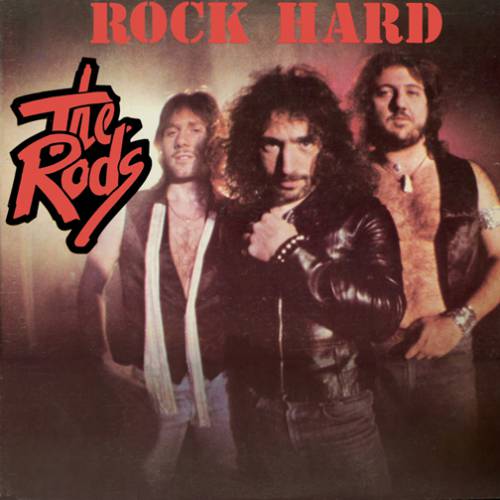
The Rods’ debut “Rock Hard” is somewhat in the vein of Riot, but slightly noisier, messier, and stripped down to a power trio. The riffs and lyrics have the blues sleaze of AC/DC, but the rhythm section displays the tenacity and quirky personality of Canadian hard rockers Max Webster. The best immediate comparison might be Def Leppard’s “High n’ Dry,” albeit with a mental capacity pounded even further into oblivion. It’s a slightly unexpected and endearing combination, and The Rods certainly were able to impress someone, because their debut attracted the attention of Arista Records, garnering a pair of major label releases in 1981 and ‘82.

Much of the album betrays a small town central New York origin of modest working class ambitions. However, the forcefulness of the band’s conviction to that goal, and their ability to write slimy riffs that move your ass mitigate this problem. Still, for all its charming naivete and impulsive aggression, “Rock Hard” is an album that belongs to the previous decade. American metal bands were still struggling to extricate themselves from the trappings of long hair groovin’ ‘70s dad rock.

This limitation was also and especially apparent with Ventura, California’s Cirith Ungol, but perhaps charmingly so. Jerry Fogle and Greg Lindstrom took their musical inspiration from the common sources of ‘70s British metal, as well as hard rock groups like Night Sun, Lucifer’s Friend, Captain Beyond, and Alice Cooper. The result was a sound with some definite crunch, but also a lo-fi guitar tone ripped straight from a beat-up practice amp. Between Tim Baker’s vulture shrieks and Lindstrom’s use of synth harpsichords, the debut “Frost and Fire” is both resolutely retro and unlike anything that came before it. The problem is that nobody wants a backwards-looking product only one decade after the fact. Nostalgia? No, that’s the stupid crap we just got rid of, and it deserved to die!

Unfair as such views may be, they are important reasons why Cirith Ungol were ignored during the ‘80s. We’re talking about a super-low budget album that, in many ways, has one foot stuck in the proto-metal era, and one in the lake of fire (heh). It’s very endearing and enjoyable and even fun, but it rarely makes your jaw drop from the audacity of it all. Bold grandeur would come years later on Cirith Ungol’s second album, but metal couldn’t wait so long. British bands were now plowing ahead at a mile a minute, and the USA needed to play catch-up. That requires us to go back to the beginning, and perhaps even earlier.

Saturday, June 7, 2014

The beginnings of American metal (part 1)

Attempting to draw any line between heavy metal and proto metal is problematic in the 1970s, and particularly so in the United States. A certain member of Sir Lord Baltimore likes to claim that he “invented heavy metal,” and consequently charges obscene rates for his autograph. I’m afraid the music on Sir Lord Baltimore’s 1970 debut “Kingdom Come” is no more ferocious or melodramatic than what Black Sabbath or Lucifer’s Friend were doing at the time, and it’s certainly shy of the mark that Sabbath would hit just a few months later with “Paranoid.”


Metal had a slower gestation in North America than in Europe. Bands like the aforementioned Sir Lord Baltimore, KISS, Band of Gypsys, Yesterday and Today, Aerosmith, Blue Oyster Cult, and Blue Cheer would toy with raw aggression in the realm of hard rock, but full on metal? That was the province of English and German bands. Americans didn’t get in on the game until the end of the ‘70s.*

So the first band that moved beyond kinda-sorta-not-really metal, and into full blown horror at our post-modern decline would be Riot. Most of New York’s noteworthy rock bands responded to the economic chaos of the ‘70s via punk rock, with its call to find unity among the rubble of the past. Metal, by contrast, rejects the very notion of civilization or collaborative enterprise, asserting the primacy of the individual as either hero, villain, anti-hero, or perhaps even deity beyond notions of morality.


New York City is a fine setting for these roles, and Riot’s first two releases “Rock City” and “Narita” were perhaps halfway between arena rock and heavy metal, but they cut the mark closer than any other band in the States, even closer than what Van Halen would do with their ‘78 debut. The NWOBHM’s downright obsession with Thin Lizzy is already present here, though there’s less of Budgie’s proto-punk bluntness and something closer to Led Zeppelin or Deep Purple with an overdriven boogie blues. We’re not quite in the territory that Judas Priest, Motorhead, or Scorpions were mining at the time, though there is a nastiness surpassing the limits of the top 40 charts. Riot were, as their label would later lament, “commercially unacceptable.” This trend would intensify with their next two albums, culminating in a true point of no return.

But “Fire Down Under” was four years away; a lifetime in music. By ‘78, as Riot were struggling through supporting tours and label difficulties, a pair of other bands were moving further into uncharted territory. However, they were doing this hundreds of literal miles removed from NYC. The first stop is Chicago, with a largely forgotten band named Sorcery. What we get on “Sinister Soldiers” is an album orbiting an entirely different planet. It’s hard to pin down the exact meaning of this debut, but Sorcery have a slight southern rock feel to their playing, and are almost funky.

An affection for Jimi Hendrix might come second-hand through listening to Scorpions, but Sorcery goes further into soul and jazz rock territory, as if they’d been spinning The Allman Brothers. ZZ Top is a fairly common influence for metal bands, but The Allmans? This is something else, perhaps also echoing Chicago blues greats like Magic Sam, Buddy Guy, or Otis Rush. The compositions have quite a bit of breathing room, melodies often feel loose and improvised, and the riffs have a good alternation between clean and distorted passages, with a bottom-end crunch that foretells Manilla Road. One can easily find thick slabs of Black Sabbath rumble on this platter, and maybe even some Budgie or “Sad Wings” era Judas Priest.

Moving yet further west, we find slightly more familiar musical ambitions brewing. Los Angeles had seen a few hard rock bands in the ‘70s, and San Francisco’s Yesterday and Today occasionally flirted with the genre (they would fully hitch their fortunes to the metal’s wagon with the great and underappreciated “Earthshaker” in 1981). The first west coast band to come within spitting distance of heavy metal were probably Alkana.

Being the pet project of one Danney Alkana, this band’s one and only album was (much like Sorcery’s debut) done as the sort of self-released vinyl that might be sold out of the back of a station wagon at local shows. “Welcome to My Paradise” occasionally veers into arena rock territory with power pop riffs and big sing-along choruses, but at its heaviest? Numbers like The Tower and Montezuma's Sweet Revenge could sit right at home on any number of British metal albums. I am especially taken with the band’s vocal harmonies and Mr. Alkana’s guitar playing. He can dazzle with technical wizardry, but has the riffs and melodies that allow him to not do so. There is also the restraint to know which is which, meaning the album doesn’t get ahead of itself. It’s a shame this was the band’s only release, though singer Jack Rucker went on to perform vocals in an excellent EP by Los Angeles metal legends Warlord.

Following the untimely demise of Alkana, we return to the east coast in part two, where metal both achieves glorious heights and plumbs the depths of poor taste.


*=And no, I’m not gonna count Rainbow. The Elf members were only on the first album, and they moved to England in order to join Blackmore, who had his name on the goddamned thing as a solo project.

Saturday, May 17, 2014

Massachusetts and Heavy Metal

I’m new here, or about as new as things get in New England. This is the place where history and learning come from, which makes any attempt to explain or summarize things problematic. There is so much back story and baggage that no two people are likely to agree on the meaning of any one thing.

So let me ignore all that and tell you how things are.

The history of heavy metal in New England is roughly as old as the story of heavy metal in America. If we assume proto-metal has strong roots in New York City, then it didn’t take long for proper metal to spring up in Connecticut. By the early ‘80s, this trouble had spread to Massachusetts, a state of particular interest to me. Groups like Steel Assassin, Gang Green, Upsidedown Cross, and Sam Black Church all did important things to move the American underground forward. Unfortunately, they still played second fiddle to the accomplishments of groups from Connecticut, which dragged a step behind places like New York City, Los Angeles, Tampa, and The Bay Area.

And then the Great Metal Purge happened.

In 1991, a series of events nearly wiped out metal in America. For roughly a decade, there was something like a moratorium on the music. You could play metal, but you had to mix it heavily with punk, and couldn’t ever actually *call* yourself metal.

So there was a lot of hemming and hawing, and brand repositioning, and ultimately growth was stunted for a lot of bands. Most of this was done to win respect and legitimacy from the “cool kids,” many of whom were also hiding old Iron Maiden and Slayer t-shirts in the backs of their closets.

Hypocritical horsecrap aside, some important things happened. Bands like Converge, Cave In, Isis, Overcast, Grief, and Agoraphobic Nosebleed helped give new meaning to what metal could be. They found fun in the ruins of the old underground, and explored new possibilities within the old sounds. These groups expelled musical pollen that turned weeds into colonies, and (for good or ill) became an invasive species throughout metal.

And in the last decade, American metal achieved a resurgence thanks in no small part to these innovations. That is the environment I arrived in, circa 2010. Massachusetts still has metalcore and sludge bands (many of them now a putrid reheating of what was great 10-15 years ago), but there is also marvelous cacophony being done so many other exciting ways. You hear a whirlwind of filth, sucking up pig vomit and repressed emotions. I live in a metro area where virtually every dozen or so days, there is a venue hosting something exciting and abrasive.

These are hard times for America, and rather ugly for Massachusetts as well. If heavy music seeks to express the trauma of working class economic crisis and cultural schism, then Boston is a pretty good place to write that thesis.